Who Is Elon Musk?
Elon Reeve Musk (born June 28, 1971, in Pretoria, South Africa) is an engineer, entrepreneur, and business magnate who became one of the most influential technology founders of the 21st century. Raised in South Africa and later moving to Canada and the United States, Musk built his reputation by repeatedly taking big technical bets — from online payments to reusable rockets to electric cars — and pushing each industry to change the way it works.
Today he is best known as the CEO and largest shareholder of Tesla and SpaceX, and for leading X (formerly Twitter), which he acquired in 2022. He has also founded Neuralink (brain-computer interfaces), The Boring Company (underground tunnels), and xAI (the artificial intelligence company behind Grok). In 2025 and 2026 he was widely reported as the wealthiest person in the world, and for a time the first person whose net worth was estimated in trillions of US dollars.
Musk is a polarizing and constantly newsworthy figure. His supporters point to breakthroughs that once seemed impossible — private spacecraft reaching the International Space Station, reusable rockets landing back on Earth, and electric cars that outsold many petrol rivals. His critics raise concerns about his outspoken public statements, his handling of Twitter/X, government contracts, and the concentration of power and money in his many ventures.
Everything here is drawn from widely reported, public sources, linked throughout and at the bottom of the page. It is a summary, not an endorsement.
Early Life
Musk was born in Pretoria, South Africa, in 1971. He has said that as a boy he was a voracious reader — of science fiction, and of technical manuals and encyclopedias — and that he taught himself computer programming at a young age. After a childhood in South Africa, he moved first to Canada and then to the United States, attending Queen's University in Canada and the University of Pennsylvania in the US, where he studied business and physics.
Rather than stay in graduate school (he briefly enrolled in a PhD program in physics at Stanford), he left to try his hand at building internet companies at the dawn of the web — a decision that would define the rest of his career.
Zip2, PayPal and the First Fortune
Zip2
In 1995 Musk co-founded Zip2, a start-up that made online content-publishing software for newspapers — including city guides and business directories. The company was bought by Compaq in 1999, and Musk's personal share of the sale was around $22 million.
X.com and PayPal
With his share of that payoff, Musk started X.com, an online financial services company aiming to change banking. After a merger, X.com became PayPal, one of the most successful online payment platforms in the world. PayPal was acquired by eBay in 2002 for about $1.5 billion in stock, a landmark deal of the early internet era.
SpaceX & the Race to Reuse Rockets
In 2002, Musk founded SpaceX — Space Exploration Technologies — with the stated goal of making space travel routine and eventually sending humans to Mars. After early launch attempts failed, the company reached a turning point in 2008 when its Falcon 1 rocket became the first privately developed, liquid-fueled rocket to reach orbit.
The breakthroughs kept coming. On May 25, 2012, SpaceX's Dragon cargo spacecraft became the first commercial spacecraft ever to dock with the International Space Station, delivering supplies for NASA. Later, SpaceX pioneered reusable rockets — first the Falcon 9 booster landing itself back on Earth after launch, a feat once thought impossible. In 2020, Crew Dragon became the first private spacecraft to carry astronauts to the ISS, ending years of US reliance on Russian rockets for crewed launches.
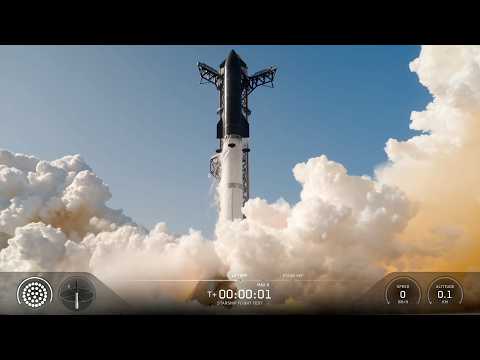
SpaceX has also built Starlink, a satellite constellation providing broadband to underserved areas, and is developing Starship, the largest rocket ever built, designed for deep-space missions and Mars. By 2026, Starship had flown multiple test flights — the 13th launching in July 2026.
Tesla & the Electric-Car Revolution
Tesla Motors was founded in July 2003 by engineers Martin Eberhard and Marc Tarpenning, and named in tribute to inventor Nikola Tesla. In February 2004, Elon Musk led the company's first funding round (investing around $30 million) and joined as chairman; in 2008 he was named CEO. Under Musk's leadership, Tesla became the mainstream electric-car maker it is today.
The Roadster, launched in 2008, was Tesla's first car. In 2012 the company stopped making the Roadster to focus on the acclaimed Model S sedan, which proved that electric cars could be fast, desirable, and critically praised. The Model 3 followed as a more affordable model for the broader market, and the angular Cybertruck arrived to much fanfare.
Tesla is now about more than cars: it makes home and grid-scale battery storage and solar energy products, and its software, batteries, and charging network have helped push the whole car industry toward electric vehicles.
Neuralink, The Boring Company & xAI
Beyond transport and space, Musk has founded several companies with a long-horizon feel. Neuralink (2016) works on surgical brain-computer interfaces aiming to help people with paralysis and eventually link minds with software. The Boring Company (2016) digs tunnels and tests underground transit as a way to beat road congestion. In 2023 he founded xAI, whose chatbot Grok is built into X and marketed as AI with "a different point of view." In 2025, xAI supplied its AI tools to parts of the US government under contracts that drew both interest and debate.
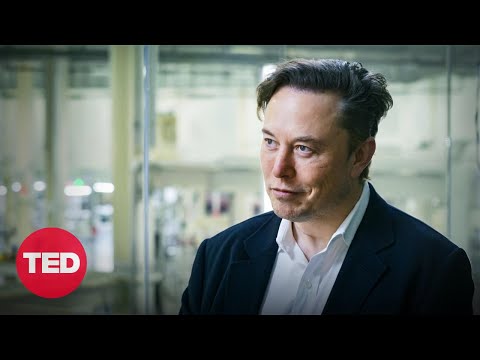
Video: Hear It From the Man Himself
Video: TED conversation with Musk / SpaceX Starship launch (via YouTube).
From the Newsstand
Key moments captured — one ace, one launch, one big idea.
Which Musk Venture Fits You?
Timeline of a Tech Career
- 1971 — Born in Pretoria, South Africa.
- 1995 — Co-founds Zip2, a web-publishing software company.
- 1999 — Compaq buys Zip2; Musk earns ~$22 million. He goes on to found X.com.
- 2000–02 — X.com merges into what becomes PayPal; eBay buys PayPal in 2002.
- 2002 — Founds SpaceX.
- 2004 — Leads Tesla's first funding round and joins as chairman.
- 2008 — Tesla launches the Roadster; SpaceX's Falcon 1 reaches orbit.
- 2012 — SpaceX's Dragon becomes the first commercial spacecraft to dock with the ISS.
- 2015 — Falcon 9 booster lands back on Earth — reusable rocketry arrives.
- 2016 — Founds Neuralink and The Boring Company.
- 2020 — Crew Dragon takes astronauts to the ISS; Tesla launches Cybertruck.
- 2022 — Acquires Twitter, rebranded X.
- 2023 — Founds xAI, maker of the Grok chatbot.
- 2025–26 — Leads the Department of Government Efficiency (DOGE); reported as the world's wealthiest person.
Timeline drawn from public, named sources; dates as widely reported.
The Public Figure
Outside his companies, Musk has become one of the most followed and debated public figures online. His enormous X account makes him both a highly visible communicator — for better and worse — and a lightning rod for debate about social media, unverified claims, the influence of the super-wealthy, and the role of business in society.
In public life he has also stepped into government: in January 2025 he led the short-lived Department of Government Efficiency (DOGE), a US federal initiative created to identify waste in government spending. It ended its official operation in 2026. His AI company, xAI, has separately sold its Grok tools to parts of the US federal government, a development that drew attention over questions of influence and conflict of interest.