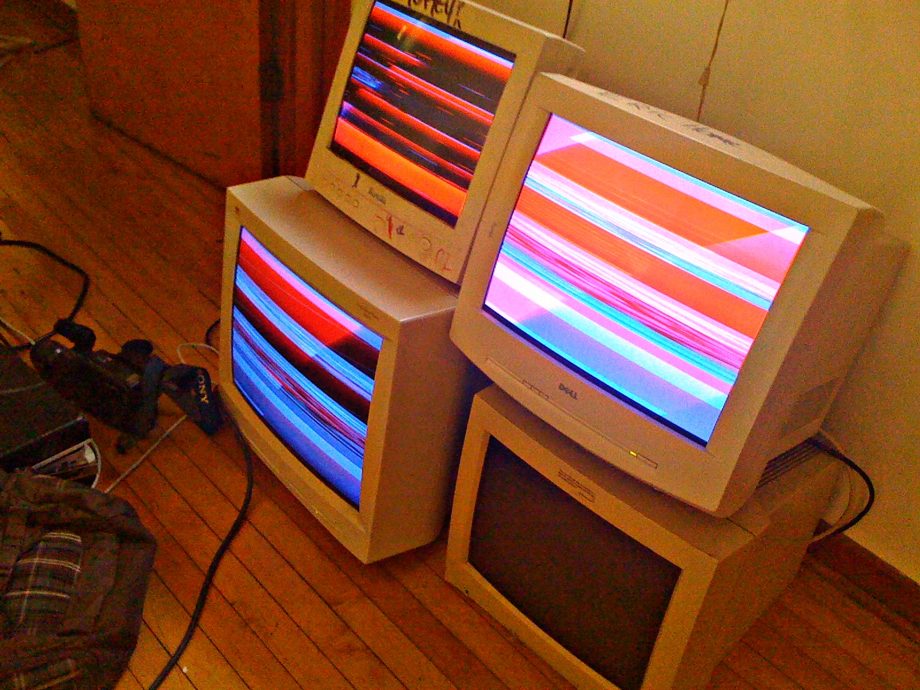
What Is a Glitch in the Matrix?
A "glitch in the matrix" is the pop-culture term for a moment where reality seems to break its own rules — an impossible coincidence, a deja-vu loop, a misplaced object, a person who shouldn't be there. The phrase comes from The Matrix (1999), where the protagonist Neo spots a black cat pass twice and dismisses it: "a glitch in the matrix." In the film, that moment is a crack in the simulated world.
The simulation hypothesis is the serious philosophical idea underneath it: the claim that the reality we experience is actually a computer simulation, and we are constructs living inside it. "Glitches" are what happens when the simulation's code briefly slips — an error renders twice, an object flickers, an NPC behaves wrongly.
The Simulation Hypothesis Explained
The modern argument is most closely associated with philosopher Nick Bostrom. In his influential 2003 paper "Are You Living in a Computer Simulation?", Bostrom argued that at least one of three propositions must be true: (1) civilizations almost always die out before attaining the technology to run ancestor simulations; (2) advanced civilizations almost never choose to run such simulations; or (3) we are almost certainly living inside a simulation.
If it is possible to build simulations that contain conscious minds (and nothing in physics rules it out so far), and if even one advanced civilization builds many such simulations, then simulated minds would vastly outnumber the one real civilization — making it statistically far more likely that we are simulated than real. Bostrom's trilemma has been debated by physicists, philosophers, and cosmologists ever since.
Popular "Glitches" People Report
Do Scientists Take It Seriously?
Many leading physicists treat simulation-type reasoning as a legitimate thought experiment. Elon Musk and others have popularized high subjective probabilities. In 2016/2017, a team proposed experiments to test whether our universe could be simulated by looking for constraints in cosmic rays or a "pixelation" of spacetime. In 2022, a physics study suggested the second law of thermodynamics and even information limits could be consistent with a simulated universe. Still, the hypothesis remains untestable in practice — and no experiment has yet produced a definitive "glitch." For now, it sits at the boundary of philosophy, physics, and sci-fi.
Quick Facts
| Term origin | The Matrix (1999) — "a glitch in the matrix" |
| Coined by | The Wachowskis (film), Nick Bostrom (simulation argument) |
| Bostrom's paper | "Are You Living in a Computer Simulation?" (2003) |
| Key idea | One of three: extinction, no simulations, or we're simulated |
| Famous fan | Elon Musk (estimates high probability of simulation) |
| Status | Philosophically debated; untested (no confirmed glitch) |
Facts sourced from Wikipedia's Simulation hypothesis and The Matrix articles.
🎥 Explore Further
From the movie that started it to the science that debates it.
🎓 Glitch in the Matrix Quiz
Sources & Further Reading
- Wikipedia: Simulation hypothesis
- Wikipedia: Nick Bostrom
- Wikipedia: The Matrix
- Simulation hypothesis — arguments
This is an informational page exploring the simulation hypothesis as a philosophical and cultural concept. The Matrix © 1999 Warner Bros. Hero image from Wikimedia Commons. Video embeds from YouTube channels.